Hexagram 6:

sòng contention, conflict, dispute, dissent

By Augustin Chan · Last updated 2025

Upper TrigramHeaven
Lower TrigramWater

Judgment

sòngcontention, conflict, dispute, dissent, contest
yǒubeing, holding, staying; having, finding
true, sincere, confident, assured; truth
zhìyet resisted, obstructed, stifled, opposed
wary, alert; vigilance, concern, caution
zhōngin, with the middle, balance, in progress
promising, timely, opportune, hopeful
zhōngat, with the end, outcome, conclusion
xiōngunfortunate, adverse, disappointing, too late
worthwhile, rewarding, productive
jiànto see, encounter, meet with, consult
the mature, complete, realized, great
rénhuman being, character, one, person, man
it, but is not, will not be
worthwhile, rewarding, favorable
shèto cross, ford, ferry, venture, experience
the great, big, major
chuānstream, river, current, water

Conflict. You are sincere and are being obstructed. A cautious halt halfway brings good fortune. Going through to the end brings misfortune. It furthers one to see the great man. It does not further one to cross the great water.

Image

tiānheaven; the sky, celestial
along, together with; in relation to
shuǐwater
wéicontradiction, opposition; contradictory
xíngin movement, motion, action, behavior
sòngcontention
jūnnoble, worthy, honored
young one, heir, disciple
accordingly, therefore, thus
zuòconducting, transacting, undertaking
shìaffairs, business; the work, task
móuconsiders, ponders, plans, appraises, consults
shǐthe beginning, source, origin

Heaven and water go their opposite ways: the image of Conflict. Thus in all his transactions the superior man carefully considers the beginning.

Digital Relic
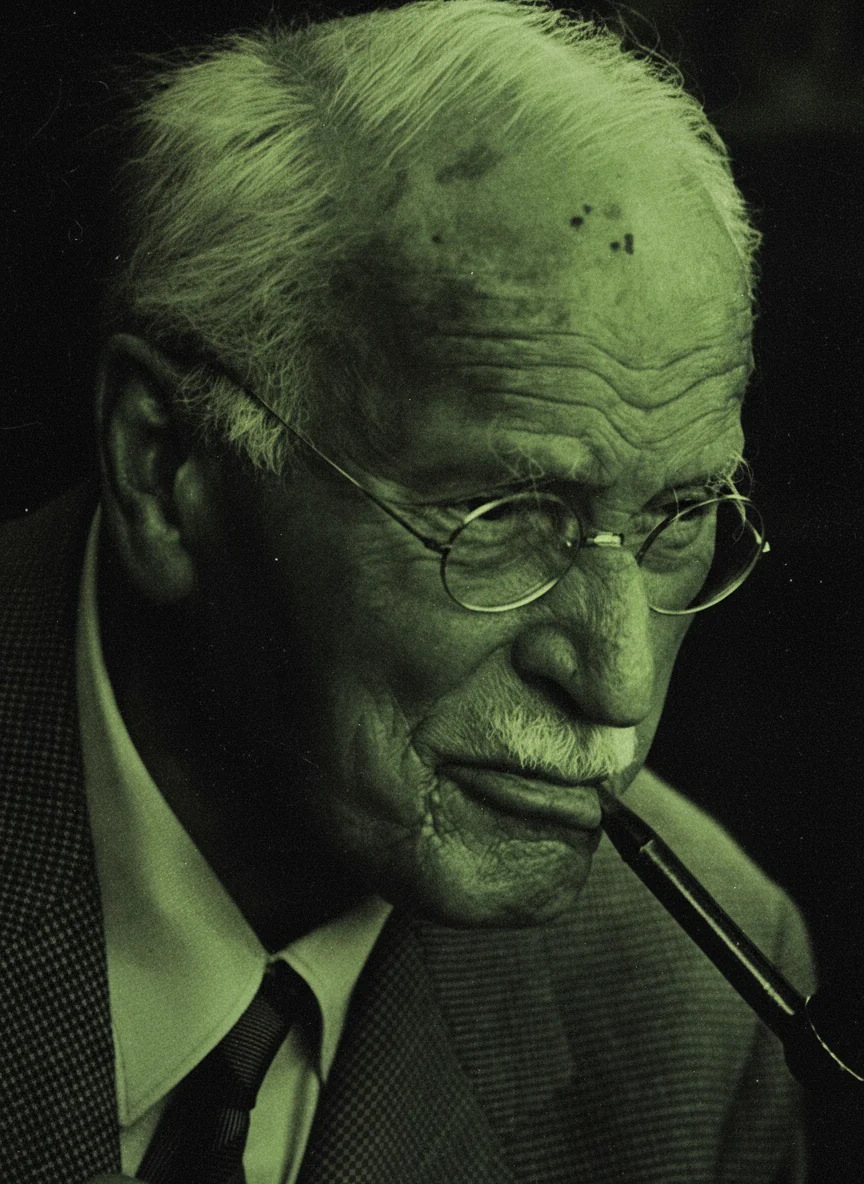
Hexagram 6 digital artifact

Carl Jung - Synchronicity: An Acausal Connecting Principle & I Ching Foreword

Carl Jung (1949)

In 1949, Carl Jung wrote the foreword to Richard Wilhelm's German translation of the I Ching, cementing a thirty-year relationship with the oracle and crystallizing his concept of synchronicity—meaningful coincidence, an acausal connecting principle that operates outside cause-and-effect. Jung faced profound internal conflict: trained as empirical scientist, practicing psychiatrist bound by Western rationalism, yet deeply drawn to alchemy, mysticism, the collective unconscious. The I Ching became his method for exploring this tension—not fortune-telling, but a mirror for the psyche's deeper patterns. He cast hexagrams for patients, for himself, for understanding moments when inner and outer reality corresponded without causal link. Hexagram 6 is Conflict (訟)—Heaven above, Water below, strength moving one direction while danger flows another. Jung embodied this: the rational mind contending with the mystical impulse, neither side willing to yield, both essential to his contribution. Synchronicity emerged from that conflict—not by resolving the tension, but by recognizing it as fundamental to how meaning arises.

Historical Context

Period
Zhou Dynasty
Oracle Bone Etymology
Heaven (☰) above, Water (☵) below—strength and light above, depth and danger below, moving in opposite directions.
Traditional Use
Conflict describes internal discord, opposing forces pulling different directions. Classical text advises against litigation and pushing conflicts to conclusion—better to seek mediation, find the wise intermediary, halt halfway.

Lines

Line 1: 不永所事小有言終吉

to avoid, not, without; to lack, without
yǒngprolong, perpetuate, sustain; a lasting
suǒcertain, specific; cause, purpose, reason
shìaffairs, endeavors, engagements; to serve
xiǎothe small, petty, mediocre; for a moment
yǒuhave; will; there will be
yánthings to say; talk, gossip, chatter
zhōngin the end, eventually; the outcome
auspicious, promising, hopeful

Line 2: 不克訟歸而逋其邑人三百戶無眚

not being; in-; un-; im-
capable of; adequate, able, possible
sòngcontending; to contend, compete, dispute
guīone capitulates, turns back, gives in
érand so, then, but only
takes refuge; to retreat, flee, hide, escape
one's own
home town, village, community
rénpopulation; and people
sānis, of three
bǎihundred
households, families
avoid, escape; do not
shěngcalamities, evil consequence

Line 3: 食舊德貞厲終吉或從王事無成

shíincorporating, subsisting on, sustained by
jiùlong-standing, conventional, familiar, classic
virtues, qualities, characteristics
zhēnin order to persist; to be steadfast; persistence
difficult, distressing, strict, hard to do
zhōngbut in the end, eventually; the outcome
auspicious, promising, hopeful
huòas, but, yet for someone; but sometimes
cóngpursuing, following, attending, engaged in
wángsovereign; the sovereign's, royal
shìaffairs, business, tasks, matters, service
no, is without; has no; there is no
chéngachievement, accomplishment, completion

Line 4: 不克訟復即命渝安貞吉

not being; in-; un-; im-
capable of; adequate, able, possible
sòngcontending; to contend, compete, dispute
returning, coming back, revising, recovering
to approach, pursue, take up, face
mìnga higher law, order, purpose, calling, lot
withdraw, amend, retract; change to, in
ānto secure, settle for, be content with; peaceful
zhēnthe certain, genuine, true; persistence
good fortune; promising, auspicious, timely

Line 5: 訟元吉

sòngthe contest, conflict; dispute; dissent
yuánis most, supremely, extremely
promising, auspicious, fortunate, timely

Line 6: 或錫之鞶帶終朝三褫之

huòsomebody, someone; if perhaps, somehow
awards, confers, grants; awarded, granted
zhīone; the, this, one's; one is
pánthe leather big, champion's belt
dàiand ribbons, girdle, victory sashes
zhōngby the end of, throughout
zhāothe morning
sānone will be three times; three times
chǐstripped, deprived; stripped away, off
zhīof them; they will be

Practical Guidance

You're a rational engineer who keeps encountering problems that logic alone can't solve. Code that works perfectly in testing fails in production for reasons the debugger can't capture. Teams that look optimal on paper produce mediocre work. Decisions that make analytical sense feel wrong. Jung's conflict: trained scientist, practicing psychiatrist, credentialed in Western empiricism—but his patients' dreams kept referencing symbols they'd never encountered, myths from cultures they'd never studied. Coincidences clustered around psychological breakthroughs in ways probability couldn't explain. The rational framework said: ignore it, confirmation bias, pattern-seeking brain. The clinical evidence said: something's happening here. He couldn't resolve the conflict by choosing one side. Abandoning empiricism would make him a mystic, not a scientist. Ignoring the synchronistic patterns would make him blind to data. So he did what Hexagram 6 advises: halt halfway. Don't force resolution. Let the conflict persist and see what emerges from the tension. Synchronicity emerged: meaningful coincidence that operates outside causality. Not mysticism—a proposed principle as rigorous as he could make it, acknowledging limits of rational explanation while remaining committed to systematic observation. The I Ching became his method: not for prediction, but for mapping the psyche's relationship to the moment. When inner state and outer circumstance correspond without causal link, that's synchronicity. Your version: the conflict between measurable metrics and felt experience. Between what the data says and what your instinct tells you. Between best practices and contextual judgment. You can't abandon one for the other—you need both. The failure mode isn't having the conflict. The failure mode is trying to resolve it by eliminating one side. Pure rationalism makes you blind to emergent properties, human factors, the unmeasurable. Pure intuition makes you sloppy, inconsistent, unable to scale. The conflict is structural—opposing forces that naturally diverge. Jung's insight: some conflicts are generative. The tension between empiricism and mysticism produced his most important work. Not by resolving into synthesis, but by maintaining both poles and exploring what happens in between. That's where synchronicity lives—in the space rationality can't fully explain but experience confirms. Halt halfway. Don't force your conflicts to premature resolution. The engineer who dismisses all gut instinct becomes a calculator. The engineer who ignores all data becomes a gambler. Neither works. Hold the tension. Let both sides articulate their case. See what emerges from the space between.

Transformations

When changing lines appear in a reading, this hexagram can transform into another.

Get an interactive reading with this hexagram

Try the Oracle →